7 contract management challenges and how software can fix them
- Manual contract management creates real business risk and revenue impact. The average business loses nearly 9% of value each year due to poor contracting processes.
- The biggest challenges like slow turnaround, poor visibility and siloed access are operational, not legal – they stem from disconnected systems and manual workflows.
- Lack of visibility is a core issue – when contracts are hard to find, track or access, the whole business loses control over obligations, risk and decision-making.
- CLM software shifts legal from reactive to proactive. By centralizing contracts, automating workflows and tracking key obligations, legal teams can reduce bottlenecks and better support the business.
Contracts sit at the center of how revenue, risk and relationships are managed, but for a lot of in-house teams, the way those contracts are handled hasn’t kept up with the demand. A typical organization handles between 20,000 and 40,000 contracts per month, and that’s not slowing down any time soon.
Many teams are turning to contract lifecycle management (CLM) software to fix issues caused by manual processes – bottlenecks, stalled sales cycles and missed obligations. In fact, the average business loses nearly 9% of annual value due to poor contracting processes. But any software you choose needs to address the real, day-to-day challenges your legal team faces. Here are seven of the most common contract management challenges we see in-house teams facing, and what solving them actually looks like.
1. Slow completion time
The problem: In many organizations, legal is still coordinating contracts via email, shared drives and static documents. Version control gets hard, approvals are unclear and signing depends on availability and manual follow-ups.
That looks like sales waiting days (or even weeks) for contract turnaround, multiple versions of the same agreement circulating and legal being seen as a bottleneck rather than an enabler.
How does software help?
CLM software streamlines drafting, approvals and execution in one place, and provides automated workflows that route contracts to the right stakeholders. The result is faster, more predictable contract cycles (with one report from the Aberdeen Group saying that automation can reduce the average contract cycle time by up to 50%) and less dependency on manual coordination.
{{testimonial 1}}
2. Slow revision timeline
The problem: Back-and-forth redlining over email or in disconnected tools creates confusion, and can lead to comments getting missed, changes being overwritten and ultimately no single source of truth. Contract negotiation should be about resolving risk, rather than managing processes.
How does software help?
Modern CLM tools enable real-time collaboration (often right inside Microsoft Word), structured version control and clear audit trails. Everyone works from the same document, with visibility into what’s changed and why. This reduces friction in negotiations and allows legal to focus on what really matters: the actual agreement.
3. Security
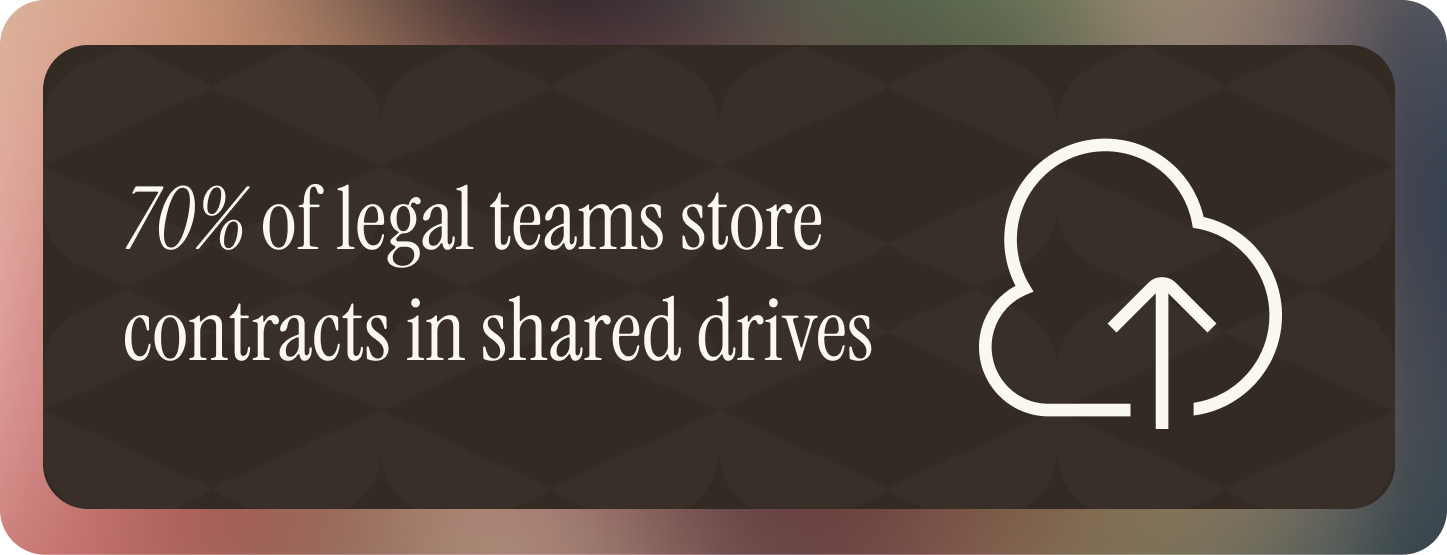
The problem: 70% of legal teams still store contracts in shared drives. Shared drive access can be broad and permissions can be unclear, leaving your sensitive and confidential contract data open to legal and reputational risk. That also makes it a lot harder to demonstrate compliance when it’s needed.
How does software help?
CLM platforms provide structured access controls, role-based permissions and full audit logs. Legal teams can define who can view, edit and approve contracts, with clear traceability – all with the goal of strengthening governance without slowing the business down.
4. Lost contracts
The problem: If contracts aren’t stored in one central, reliable source of truth, legal spends hours searching for agreements or specific language, causing delays responding to internal or external queries. In an EY report, it was found that 90% of contracting professionals feel that finding specific documents is a challenge.
How does software help?
A centralized contract repository ensures that all agreements are stored in one place, complete with structured metadata and search functionality. Instead of searching manually, the whole business can quickly locate contracts, surface key clauses and answer business questions with confidence.
5. Wasted time on manual processes
The problem: From drafting standard agreements to chasing signatures and tracking status, a lot of contract management is still handled manually, which can have huge losses. Research by 4C found that manual contract processing costs UK businesses alone an average of £10 million per year in operational inefficiencies.
How does software help?
CLM tools automate routine tasks like document generation, workflow routing and status tracking. Templates can be used to standardize common agreements, enabling self-serve for low-value agreements like NDAs, and automation generally reduces the need for manual intervention. This frees up legal teams to focus on higher-value work like advising on risk, supporting strategy and enabling the business to move faster.
6. Siloed access and awareness
The problem: Legal can often end up acting as a gatekeeper for contracts, with other teams siloed and relying on legal for updates, copies and clarification. It means legal get inundated with repetitive questions and misalignment between teams on contract terms or status.
How does software help?
CLM platforms can enable controlled, role-based access across teams. Stakeholders can view relevant contracts, track progress and access key information without relying on legal for every request. This improves transparency while allowing legal to maintain oversight and control.
More and more, teams are layering in secure, AI-driven capabilities that let users surface answers, extract key terms and understand contracts in context, without exposing sensitive information or losing control. Instead of searching manually or interrupting legal, business teams can quickly access the insights they need while legal can be confident about how contract data is being used.
7. Contract non-compliance
The problem: Even when contracts are signed and stored, the obligations within them are often not actively managed. This could mean missed renewal or termination deadlines, failure to meet contractual commitments and limited visibility into ongoing obligations. Non-compliance can lead to financial penalties, disputes and reputational damage, not to mention the monetary losses that can come with missed auto-renewal – which 50% of legal teams say they’ve dealt with.
How can software help?
CLM analytics systems can track key dates, obligations and milestones, even syncing dates with calendar apps. Legal and business teams can stay ahead of commitments rather than reacting to them after the fact. This shifts contract management from reactive to proactive – reducing risk and improving accountability.
What to do next
If any of these challenges sound familiar, the next step isn’t just adopting software – it’s about understanding where your current process is breaking down and what “good” looks like for your team. Here are just a few things to explore now:
- What effective CLM implementation looks like in practice
- How to build internal buy-in for legal tech and how CLM could help other teams like sales, procurement, HR and finance
- The key features that matter most for in-house teams
- How other organizations have approached contract transformation
Taking control of your contracting processes with Summize
Contract management software isn’t just about digitalizing documents – it’s about giving legal teams the visibility, control and efficiency they need to support the business better.
{{testimonial 2}}
If you’re looking to reduce bottlenecks, improve collaboration and manage risk more proactively, it’s worth taking a closer look at Summize’s contract management software to see how it can help transform the way your legal team works.

With Summize, it used to take half a day to create an NDA. Now it only takes 10 minutes.

"Summize has allowed us to organize our contracts, create an integrated workflow for requests and approvals, build tools like a calendar alert system, improve redlining efficiency, and manage contracts efficiently."

Frequently Asked Questions
View allInsights, updates, whitepapers
View all

.png)